


However, the best time to cut your grass changes with the season, as does the frequency with which you should mow and the cutting height that you should use.
Here at Hayter, we’ve been manufacturing mowers for 80 years, so we know exactly when to start cutting grass and when to stop cutting grass to ensure your lawn always looks perfect.
In this guide, our Hayter mower specialists will walk you through the do’s and don’ts for every season – allowing you to mow with confidence, no matter the time of year.
In this guide:
- When to start cutting my grass?
- When to stop cutting my grass?
- When should I cut my grass in Spring?
- When should I cut my grass in Summer?
- When should I cut my grass in Autumn?
- When should I cut my grass in Winter?
When to start cutting my grass?
You will know when to start cutting grass by monitoring the temperature from early to mid-spring. Mowing should only ever be completed when temperatures are consistently above 6°C and the winter frost has completely passed.
You will find the weather meets these conditions most commonly in late March to early April – the beginning of the cutting season in the UK.
If you’re unsure whether you’re ready to take the plunge and start mowing in the new year, check out our Complete Guide to the First Cut of the Year.
When the cutting season begins, grass growth will still be slower than in the summer months, due to the shorter nights and lower average temperatures.
This is why you should begin by mowing every two weeks with a higher cutting height enabled, shortening to every 10 days and eventually to weekly around mid-May, when the weather is consistently above 10°C.
When to stop cutting my grass?
You should stop cutting the grass in either late October or early November. This is when the cutting season comes to an end.
At the start of mowing season in spring, we advise mowing should begin when temperatures are above 6°C. Similarly, in autumn/winter, you should quit the cut when temperatures are consistently hitting 6°C or below.
If we are having a warmer late autumn, you may find mowing can continue into early to mid-November.
Now that cutting has stopped, it’s time to book your mower in for servicing. Regular servicing will keep your Hayter mower’s warranty, but it will also make sure that your mower is in perfect condition for next spring.
If it’s too cold to mow, it’s important to still perform regular garden maintenance tasks to keep your lawn healthy for next spring.
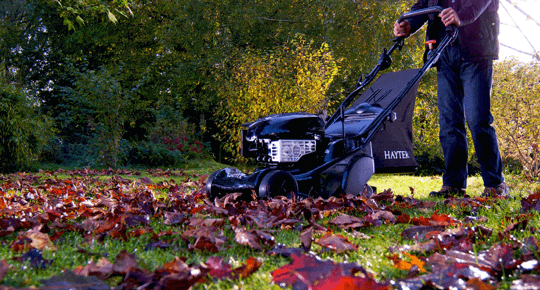
Late autumn and early winter are the ideal times for maintenance – you should carry out a regular clean-up of garden borders and leaves as and when needed.
How to care for your lawn in winter
Winter can be a confusing time for us gardeners – the cutting season ends, the weather fluctuates between rain, frost and snow, and our grass can take a real beating.
The main goal with winter lawn care is to keep the grass in optimum health, ready for spring mowing.
Should you fertilise your lawn in winter?
It’s essential to feed or fertilise your grass in the lead-up to winter, in order to promote healthy growth in spring and help the grass recover from the stresses of winter weather.
However, there are some caveats – fertilising your lawn in the deepest depths of winter can lead to weak, vulnerable growth and risk winter diseases – so the timing and type of feed you use are essential considerations.
Despite what you might read online, timely application of a dedicated winter fertiliser will help strengthen your lawn grass’ roots, improving its resilience to frost and disease – while also giving it a much-needed nutrient boost.
How to feed grass in winter
As we mentioned above, your final mow of the year will depend on temperatures in your specific region, so you might find yourself mowing well into November.
Here are two keys to success for late-season feeding:
Don’t leave it too late:
If you want to feed your grass, always avoid fertilising after the final mow, making sure you avoid the first frost of the winter months.
Your final feed should take place around the time of your last mow, using a special winter feed formulation.
Use a dedicated winter fertiliser:
Avoid typical feed formulations as these are high in nitrogen. This can trigger rapid blade growth, which is easily damaged in winter months. Instead, look for high-potassium variants of feed, as these can help strengthen your grass’ roots.
You can find specific variants of fertiliser made for lawns in the winter months, commonly higher in potassium, as recommended above.
If in doubt, make sure to read the grass feed packaging carefully and ask an assistant for help.
When is the best time to cut grass?
The best time of day to cut your grass is mid-morning to early evening, but this may change depending on the time of year due to the season’s optimal sunlight and temperature time.
It’s also important to consider which direction your garden is facing, as south-facing gardens will remain exposed to sunlight until slightly later in the day.
As you get towards the end of the mowing season, mow when the sun is at its highest or when the weather is forecast to be warmest.
In contrast, if it’s too hot in the summer, mow in the early evening or morning. When mowing in the morning, be careful to check that the grass is not still wet from dew – this can leave grass patchy, uneven and prone to infection.
What times of day should I avoid mowing?
Mowing at the wrong time of day can hamper grass growth, leaving grass weaker. Mowing at midday in summer, for example, is far too hot for your grass – causing turf stress.
Times of day to watch out for include:
After dusk – Mowing at this time will leave your lawn vulnerable to fungal attacks. It may also disturb neighbours who may have young children they are trying to get to sleep!
Afternoon – Cutting your grass in the afternoon can disturb natural wildlife. As these creatures are very beneficial to the ecosystem of your garden, you don’t want to discourage them.
Very early morning – During this time, the weather may be too cold, the grass may also be frosty or still wet from dew. All these factors will damage grass growth and the turf.
How often to cut grass
How often to cut grass in spring, summer and autumn will depend on the temperature, but for the majority of the cutting season, you will be mowing once a week.
Below, we explain the mowing frequency for each season:

How often to cut grass in spring
Once temperatures have reached the correct temperature, mow the grass every two weeks, shortening to 10 days by mid-to-late April and finally cutting weekly as we transition into May.
Raise your cutting height during this period to account for slower grass growth.
How often to cut grass in summer
When it comes to mowing your grass in summer, mowing frequency must be flexible. Thanks to climate change, droughts are common now in England, and have become more normal over the past five years.
Be aware that guidance will differ across the UK, but with every area of the country experiencing summer heatwaves, protecting stressed turf should be your priority.
With drought now a normal part of UK summers, we have provided specific drought mowing guidance below.
However, during summer’s usual hot/dry spells, homeowners should raise their mowing height. Weekly mowing applies during normal weather conditions, but should be reduced to every 10-14 days during a drought.
If your area is experiencing a particularly dry summer, you may find your lawn becoming discoloured. Some extra actions are required to keep your lawn looking exactly how you like it.
Check out our Dry Weather Garden Care blog.
Learn How to Fix a Discoloured Lawn.
Mowing in a drought
There is a one drought-specific caveat to take into account, however! During drought or extreme heat, mowing should be paused or reduced in order to account for grass dormancy.
Grass dormancy is a natural survival mechanism that allows your lawn to cope with periods of environmental stress, such as prolonged drought. During dormancy, the grass conserves energy by slowing or completely stopping its growth.
This means that regular mowing is not necessary – and can even be harmful or stressful to growth.
To maintain your lawn stripes without mowing your grass, use the Hayter Lawn Roller. Using a roller in the same pattern you would your regular mower will refresh existing stripes by gently laying your grass blades back into their original pattern.
This will maintain a neat appearance without affecting your grass’ leaf tissue.
How often to cut grass in autumn
As the weather gets cooler, you can reduce your mowing frequency, returning to mowing only once every couple of weeks.
You should also raise your cutting height back to spring levels.
Pro tip:
When raising the cutting height, the Hayter Hawk or Harrier mowers can also function as a makeshift leaf collector, rounding up any unwanted leaves from your lawn!
When should I aerate my lawn?
Early Autumn (September–October) is now the number one aeration window in the UK.During this stage of the year, soil is still warm, while rainfall is increasing, meaning that your grass is actively repairing itself – giving you perfect conditions for overseeding and feeding.
This is when most homeowners do their “big lawn renovation”.
Start by giving your lawn a once-over with a spiked aerator. This improves surface air and water movement, acting as a pre-treatment. Then, go deeper with a hollow tine aerator, relieving soil compaction by creating space for air, water and roots.
Early spring provides a second window for aeration, if your lawn feels compacted or waterlogged following the winter months. Aerating your lawn will open your lawn’s surface and encourage early growth.
When to roll your lawn
We’ve already discussed the lawn roller as a viable alternative during drought season to keep your lawn looking tip-top. But which other points of the year could you benefit from using a lawn roller?
March-April is the perfect time to use a lawn roller to maximum effect, helping firm the lawn after winter frost heave and re-settling any turf that has lifted or become uneven.
Moist, but not saturated turf makes for ideal rolling conditions, with grass beginning to grow actively.
You can also use the roller in early autumn, for light consolidation after using your hollow tine aerator and aerating. During this period, it’ll help maximise contact between your new seed and soil, evening out minor bumps before winter.
You should avoid using the roller during deep winter, since frozen soil can be damaged. Waterlogged conditions should also be avoided, since this can cause rutting.
When to use a lawn levelling rake?
A lawn levelling rake (also known as a lawn lute) is a wide, flat tool used to smooth and spreads top dressing materials like sand, loam or soil across a lawn. If you’re looking to create a flat, even mowing surface, a lawn levelling rake helps distribute material evenly without digging into your turf.
The mild conditions of autumn and spring also make the ideal time to use your lawn levelling rake, to help recovery from more intense weather during summer and winter.
Heavy winter rain might create dips in your soil, while drought could create cracks, making a lawn levelling rake a valuable asset for your garden.
When should I spread compost?
Topdressing and compost integration has become increasingly common in recent years, thanks to the growing popularity of overseeding and the importance of drought recovery. Investing in a compost spreader will help make your life easier and help improve soil structure in milder months.
April and May tend to form the most important compost spreading window, with topdressing after levelling an important step to add organic matter after your lawn’s winter stress.
During this window, soil is workable and compost helps with moisture retention for the upcoming summer months.
Similarly, topdressing in autumn, particularly September and October, helps support autumn overseeding following hollow-tine aeration, prepping your lawn for a resilient winter.
Avoid spreading compost during summer heatwaves, since the compost easily dries out and can scorch. During winter, the soil is likely to be too wet, so compost can easily become anaerobic.
Grab your Hayter mower today
So, now you know exactly how to care for your lawn at every point of the calendar year – but do you have the tools to do it?
Our range of battery-powered and petrol mowers provide the ultimate mowing experience and are available in a range of different sizes to suit different gardens.
Plus, with the new range of non-powered garden hand tools from Hayter, you can give your garden the unparalleled care and attention it deserves. The new range includes:
- Garden Lawn Roller
- Garden Compost Spreader
- Hollow Tine Aerator
- Lawn Levelling Rake
- Spiked Lawn Aerator
We also stock Toro power tools, such as strimmers and leaf blowers, that can be powered by the same 60V battery as our battery mowers.
Give your lawn the perfect finish with Hayter today!
Get in touch
Want to learn more about our battery and petrol mowers? Get in touch! Our friendly team are waiting to hear from you.
We want to see your stunning lawns, so make sure to tag us in your social media posts and use the hashtag #HayterStripes.
Follow Hayter on Instagram and Facebook for a chance to have your best garden photos shared on our page.