




Home
›
About Us
Creating Matchless British Lawn Care Products For 80 Years
The Hayter name has been synonymous with revolutionary lawnmowers and beautiful British gardens for over three quarters of a century. What began as a small cottage business has grown to become the UK’s largest and most respected manufacturer of rear roller lawnmowers thanks to the pioneering vision of founder Douglas Hayter. A tireless focus on unrivalled British quality, innovation, craftsmanship and engineering has remained an integral part of Hayter’s DNA for more than 80 years. Throughout the company’s history, Hayter have continually invested in people, facilities and technology to consistently deliver the pinnacle of lawnmower manufacturing.
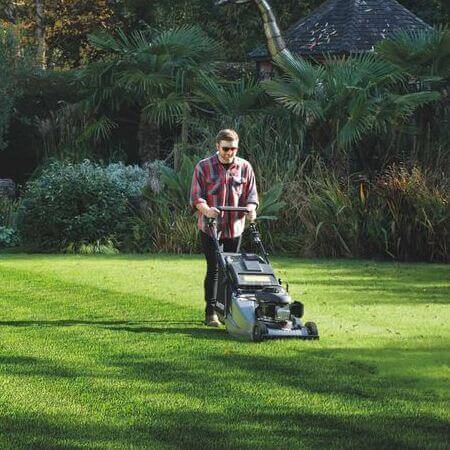
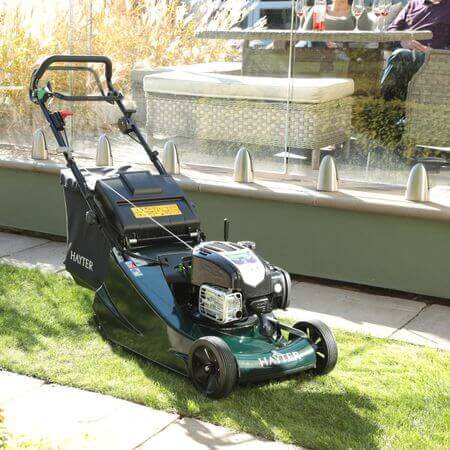
Our team of experts design and manufacture high-quality lawn care products with individual customer needs at the forefront of their minds. Taking into account the individual experiences and needs of our British customer base drives the Hayter design team to create and innovate products with the utmost care and attention to detail. All teams under the Hayter name work to the highest possible standards, combining the best of technology and traditional thinking to fulfil the mission statement to be the “Maker of the finest mowers”.
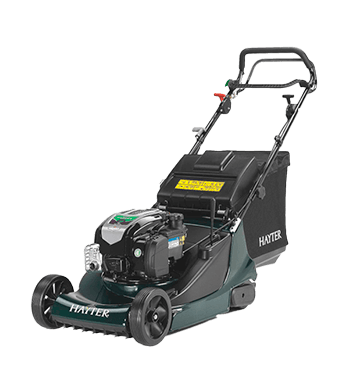
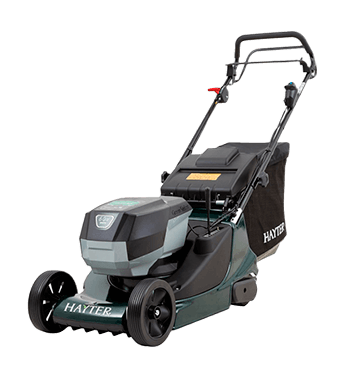
Since the very first Hayter® Motor Scythe was created, we have strived to deliver an enjoyable and effortless mowing experience, as well as the ability to create a beautiful lawn and our sought-after Hayter Stripes with ease. We’re proud to offer an extraordinary range of petrol and battery powered lawnmowers, along with outstanding Toro® power tools, to transform lawn maintenance efficiency for homeowners and contractors across the UK.
Since the very first Hayter® Motor Scythe was created, we have strived to deliver an enjoyable and effortless mowing experience, as well as the ability to create a beautiful lawn and our sought-after Hayter Stripes with ease. We’re proud to offer an extraordinary range of petrol and battery powered lawnmowers, along with outstanding Toro® power tools, to transform lawn maintenance efficiency for homeowners and contractors across the UK.
A Captivating Legacy Steeped in British History
Hayter has a unique and thoroughly British story to tell about how the finest quality lawnmowers came to be, taking us back to 1946. Unmoved by his simple life in Bishop’s Stortford, Douglas Hayter uncovered a hidden love affair with engineering that began with the servicing of aeroplane engines.
The ground breaking engineer and owner of his own building company conceptualised the iconic Hayter rotary lawnmower after seeing a 100-year-old horse-drawn rotary mower in the London Science Museum. Upon returning to his home in the small village of Spellbrook, Hertfordshire, he crafted a mower frame by hand using a collection of spare pieces he had, and combined them with a second hand two-stroke engine. By the very next day, the very first Hayter rotary lawnmower, complete with a dustbin lid over the rotor, was brought to life and 1946 saw Hayter incorporated as a limited company.
The ground breaking engineer and owner of his own building company conceptualised the iconic Hayter rotary lawnmower after seeing a 100-year-old horse-drawn rotary mower in the London Science Museum. Upon returning to his home in the small village of Spellbrook, Hertfordshire, he crafted a mower frame by hand using a collection of spare pieces he had, and combined them with a second hand two-stroke engine. By the very next day, the very first Hayter rotary lawnmower, complete with a dustbin lid over the rotor, was brought to life and 1946 saw Hayter incorporated as a limited company.
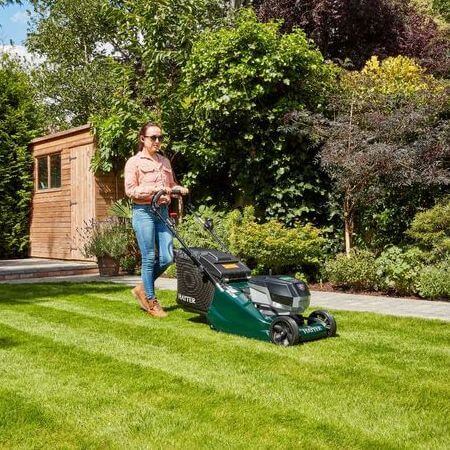
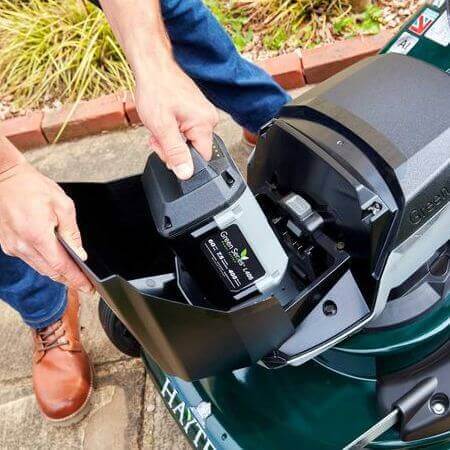
Premium Mowers Worthy of Their Royal Warrant
The new engine-powered lawnmower caught the attention of an eager neighbour who requested a mower of his own. It was after this brief encounter that demand for the exciting product steadily grew as people began to recognise its potential as an innovative gardening tool. In 1947 the new Hayter Motor Scythe went into full production, offering UK gardeners a hand-propelled motor mower with a 24” cut. The first of Mr. Hayter’s customers included Ipswich Town Council who sought out the product after learning of its unique capabilities. Further developments to the product included the fitting of a safety stone guard to the mower deck and the installation of a four-stroke engine with horizontal crankshaft when resources became more readily available toward the end of the decade.
By 1960, Hayter was awarded a Royal Warrant for the supply of horticultural equipment to Her Majesty the Queen at the Sandringham Estate, revealing that the matchless British Craftmanship and innovative engineering of the Hayter range was worthy of Royal acclaim. Today, Hayter continue to supply lawnmowers to the British Royal estate, which remains the highest possible honour and speaks of the company’s commitment to impeccable quality.
Experience the revolutionary Hayter range today and discover quality British lawnmowers with a difference.
By 1960, Hayter was awarded a Royal Warrant for the supply of horticultural equipment to Her Majesty the Queen at the Sandringham Estate, revealing that the matchless British Craftmanship and innovative engineering of the Hayter range was worthy of Royal acclaim. Today, Hayter continue to supply lawnmowers to the British Royal estate, which remains the highest possible honour and speaks of the company’s commitment to impeccable quality.
Experience the revolutionary Hayter range today and discover quality British lawnmowers with a difference.
Search for your nearest authorised Hayter dealer